Biosolids PFAS Land Application Compliance and Chain-of-Custody SaaS
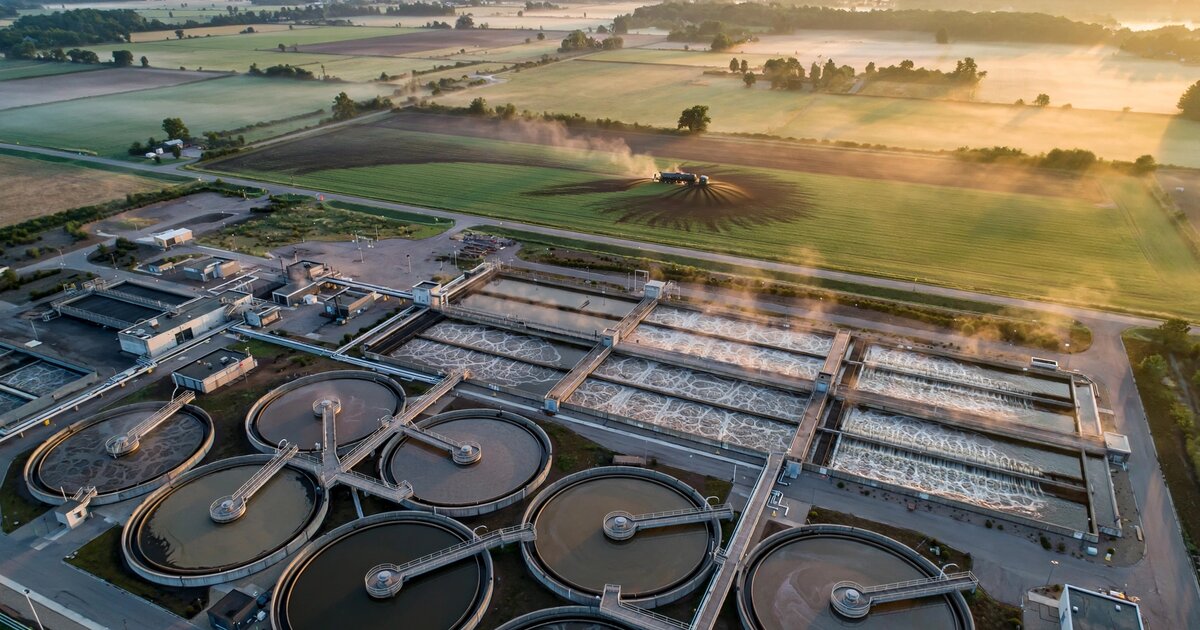
American wastewater treatment plants produce roughly four million dry metric tons of sewage sludge every year. Until recently, most of it got spread on farmland as fertilizer, and nobody thought much about what else was in it. Then EPA added PFOA and PFOS to the CERCLA hazardous substance list. Maine banned land application entirely. Connecticut followed. A federal lawsuit is trying to force EPA to regulate 29 PFAS compounds in biosolids. Bluefield Research projects that management costs will double from $2.5 billion to $4.8 billion annually by 2035. And the 23,900 treatment plants tracking all of this? Most of them file paper Discharge Monitoring Reports, maintain spreadsheets of cumulative pollutant loads, and fax 30-day land application notices to state regulators.
The Problem
The United States manages its sewage sludge under 40 CFR Part 503, a regulation finalized in 1993. For three decades, it set limits on nine heavy metals (arsenic, cadmium, copper, lead, mercury, molybdenum, nickel, selenium, and zinc), required pathogen and vector attraction reduction, and left everything else unregulated. That framework held up as long as the contaminants in municipal wastewater were the same ones the rule addressed. They are not anymore.
The EPA's Office of Inspector General has identified 352 additional contaminants in biosolids that the agency has never regulated, including per- and polyfluoroalkyl substances (PFAS), pharmaceuticals, dioxins, and polychlorinated biphenyls. Of those 352, thirty-five are already regulated as pollutants under the Clean Water Act, thirty-two are classified as hazardous waste, and sixteen are listed as hazardous drugs. The agency agreed to collect data and conduct risk assessments. It declined to update its website to acknowledge that it cannot currently assure the safety of land-applied biosolids.
Three developments have collided to turn this regulatory gap into a crisis:
PFAS became a CERCLA hazardous substance. In May 2024, EPA formally added PFOA and PFOS to the Comprehensive Environmental Response, Compensation, and Liability Act (CERCLA) hazardous substance list. This means releases of these chemicals can now trigger federal reporting obligations, cleanup requirements, and Superfund liability. For a wastewater treatment plant that land-applies biosolids containing PFOA at concentrations as low as 1 part per billion, the question is no longer "is this best practice?" but "is this a reportable release of a hazardous substance onto agricultural land?" The legal exposure is existential.
States started banning land application entirely. Maine enacted a total ban on spreading biosolids on land in 2022. Connecticut followed in 2024. Michigan imposed strict PFAS testing requirements that effectively prohibit application for facilities that cannot demonstrate low concentrations. Other states are watching. When a state bans land application, the treatment plant that was spending $30-50 per wet ton to spread sludge on nearby farms must suddenly pay $80-150 per wet ton to truck it to a landfill or incinerate it. For a mid-size plant producing 20,000 wet tons per year, that is an overnight cost increase of $1-2 million annually.
EPA released its first-ever PFAS biosolids risk assessment. In January 2025, the agency published a draft risk assessment for PFOA and PFOS in sewage sludge, finding that concentrations as low as 1 ppb could pose health risks through multiple exposure pathways: leaching to groundwater, uptake into crops, and ingestion by grazing livestock. In July 2026, EPA followed with draft guidance recommending that treatment plants, land appliers, and farmers take voluntary steps to mitigate PFAS risks. The comment period runs through September 4, 2026. This is not yet a regulation, but the trajectory is clear: federal PFAS limits for biosolids are coming, and every plant needs documentation infrastructure to prove compliance.
Meanwhile, a federal lawsuit (James Farmer et al. v. EPA, Civil No. 1:24-cv-01654, D.D.C.) brought by Texas and Maine farmers argues that the Clean Water Act's Section 405 mandates EPA to regulate PFAS in biosolids and that the agency has failed its nondiscretionary duty by identifying 29 PFAS compounds in its biennial surveys without promulgating regulations for any of them. The district court dismissed the case in 2025, but plaintiffs have appealed. A reversal could force EPA to add PFAS to Part 503, triggering mandatory monitoring, reporting, and pollutant limits for every facility in the country.
The Gap in the Market
Biosolids management software is, to a first approximation, nonexistent in the US market.
| Company | What They Do | What's Missing |
|---|---|---|
| EPA Biosolids Data Management System (BDMS) | EPA developed BDMS in the late 1990s to allow facilities and regulators to enter compliance data: facility information, treatment processes, metals monitoring, cumulative pollutant loading, and pathogen reduction records. The software was distributed via the internet. | BDMS is functionally abandoned. It was designed for the Part 503 metals-only world and has no PFAS tracking capability. It cannot handle state-specific requirements, does not connect to laboratory information management systems (LIMS), and offers no chain-of-custody documentation for biosolids from plant to field. Most facilities that used it have migrated to spreadsheets. |
| Tracsis BIO (UK) | Tracsis Geo Intelligence built a biosolids management platform for Dŵr Cymru Welsh Water that tracks sludge from treatment works to field application with automated soil sampling, regulatory documentation, and weighbridge integration. | UK-only. Built for UK regulations (Environment Agency standards, Safe Sludge Matrix, nitrate management). No US Part 503 compliance, no PFAS tracking, no CERCLA liability management. Not available for licensing by US utilities. |
| State-specific tools (Pennsylvania iPad app, Maryland complaint database) | Pennsylvania's Bureau of Clean Water developed an iPad app for 30-Day Notice site suitability reviews. Maryland built a centralized database for biosolids complaints. A handful of other states have custom reporting portals. | These are inspection and complaint tools, not operational management platforms. They solve one step of the process (field review, complaint tracking) and ignore everything else: PFAS test result integration, cumulative pollutant loading calculations, hauler chain-of-custody, land application rate optimization, and multi-state compliance for contract haulers operating across jurisdictions. |
| Environmental compliance platforms (Enablon, Intelex, Sphera) | Enterprise EHS platforms that cover broad environmental compliance: air permits, hazardous waste manifests, incident reporting, ESG metrics. Some utilities use these for general environmental management. | No biosolids-specific modules. These platforms manage dozens of compliance domains and go deep in none of them. Configuring Enablon to track cumulative PFAS loading across 47 land application sites, correlate results with soil sampling data, and generate Part 503 annual reports requires custom development that costs $200K-500K and takes 12-18 months. Most utilities cannot justify that investment. |
| Spreadsheets and paper (the real incumbent) | The majority of the 23,900 US treatment plants track biosolids compliance using Excel, paper Discharge Monitoring Reports (DMRs), and manual calculations. Cumulative pollutant loading is tallied by hand or in worksheets passed between operators across shift changes. | Everything. No automated PFAS trend analysis, no chain-of-custody documentation, no real-time cumulative loading alerts, no multi-site aggregation, no regulatory change tracking, and no audit trail sufficient to defend a CERCLA enforcement action. |
The Solution
A vertical SaaS platform purpose-built for municipal biosolids programs, solving four problems simultaneously: PFAS compliance tracking, chain-of-custody documentation, regulatory intelligence, and cost optimization.
1. PFAS monitoring integration and trend analysis ($299/month per facility): Direct API integration with major environmental laboratories (Pace Analytical, Eurofins, SGS, TestAmerica) to automatically ingest PFAS analytical results. The platform tracks PFOA, PFOS, and total PFAS concentrations across biosolids samples, soil samples from application sites, and groundwater monitoring wells. Automated trend analysis flags facilities approaching state-specific thresholds (where they exist) or the 1 ppb level identified in EPA's draft risk assessment. For plants that do not yet test for PFAS, the platform estimates likely concentrations based on service area characteristics (industrial pretreatment program data, number of permitted industrial users, land use in the collection system) and prioritizes testing recommendations.
2. Chain-of-custody from clarifier to field ($149/month per facility): Every load of biosolids leaving the treatment plant is documented with a digital manifest: origin tank or lagoon, dewatering method, volume, moisture content, date, time, truck ID, driver, GPS coordinates at loading and at the application site, and application rate (dry tons per acre). Each manifest links to the corresponding analytical results for that batch. This creates an auditable record proving that specific biosolids, with known contaminant concentrations, were applied at specific rates to specific fields. When EPA or a state agency asks "what did you put on that farm field in March 2025?", the answer is a PDF with GPS coordinates, not a phone call to the guy who drove the truck.
3. Cumulative pollutant loading calculator with real-time alerts ($99/month per facility add-on): Part 503 sets cumulative pollutant loading rates (CPLRs) for nine metals applied to any given site over its lifetime. The calculation requires tracking every application to every field, multiplying concentration by application rate, and summing over years or decades. Most facilities do this annually in a spreadsheet, which means they discover they have exceeded a CPLR after the fact. The platform calculates remaining loading capacity in real time for each field, factoring in both legacy metals and emerging PFAS limits (where states have set them), and alerts operators when a site approaches 80% of its lifetime loading limit. This prevents the scenario where a facility unknowingly exceeds a threshold, triggering a violation and potential CERCLA liability.
4. Multi-state regulatory intelligence dashboard ($199/month per organization): Biosolids regulations vary wildly by state and are changing rapidly. Maine has a total ban. Connecticut has a total ban. Michigan requires PFAS testing above certain thresholds. Washington state has a draft rule. California's DTSC is developing new management standards. For a contract biosolids hauler operating in three states, or a regional utility authority managing plants in multiple jurisdictions, tracking which rules apply where is a full-time job. The platform maintains a current regulatory database for all 50 states plus EPA Part 503, maps each facility's requirements, and pushes alerts when relevant regulations change. This is the "what do I need to comply with" layer that sits underneath the operational tracking.
5. Disposal pathway cost optimization ($99/month per facility add-on): When land application becomes restricted or banned, utilities face a portfolio of expensive alternatives: landfill disposal ($60-100/wet ton), incineration ($80-200/wet ton), thermal drying ($40-80/wet ton plus capital), composting ($30-60/wet ton), or advanced treatment like pyrolysis or gasification ($100-250/wet ton). The platform models total cost of each pathway based on the facility's specific volumes, moisture content, contaminant profile, transportation distances, and available outlets. For a plant producing 50,000 wet tons per year, optimizing the disposal mix can save $500K-1.5M annually compared to the default of trucking everything to the nearest landfill.
The Math: What PFAS Non-Compliance Actually Costs
Consider a mid-size municipal wastewater treatment plant in the Northeast serving 80,000 people, producing 15,000 wet tons of biosolids per year, and currently land-applying all of it to local farms at $40 per wet ton.
Scenario A: No PFAS tracking, land application ban imposed
When the state imposes PFAS testing requirements, the facility has no historical data. Initial testing reveals PFOA at 8 ppb, above the state's proposed threshold. Land application is suspended immediately. The facility must emergency-contract landfill disposal at $95 per wet ton. Annual cost increase: 15,000 × ($95 - $40) = $825,000. Additionally, farmers who received biosolids from this facility over the previous five years file claims alleging soil contamination. Without chain-of-custody records documenting what was applied where and at what concentration, the facility cannot demonstrate compliance with the standards that existed at the time of application. Legal defense costs: $200K-500K. Potential CERCLA liability if groundwater testing shows PFOA contamination attributable to biosolids application: $2-10 million in remediation costs, per site.
Scenario B: Platform-enabled operations
The facility has been tracking PFAS concentrations for 18 months before the state regulation takes effect. Data shows PFOA trending upward from 2 ppb to 5 ppb, prompting an investigation that identifies a metal finishing shop discharging PFAS to the collection system. The facility issues pretreatment requirements to the industrial user, reducing PFOA to 1.5 ppb within six months. When the state regulation takes effect, the facility's biosolids are below the threshold and land application continues without interruption. Cost savings vs. Scenario A: $825,000/year in avoided disposal cost increases. The chain-of-custody records also provide documented evidence that historical applications were within regulatory limits, reducing litigation exposure to near zero.
Annual platform cost for this facility: $299 (PFAS tracking) + $149 (chain of custody) + $99 (CPLR calculator) = $547/month, or $6,564/year. ROI on avoided disposal cost alone: 125x. Including litigation avoidance, the ROI is incalculable because you cannot divide by zero (the cost of getting sued for Superfund liability at a farm field).
Revenue Model
| Revenue Stream | Amount | Notes |
|---|---|---|
| PFAS monitoring integration (per facility/month) | $299 | Lab result ingestion, trend analysis, threshold alerts, concentration modeling. Core product. |
| Chain-of-custody tracking (per facility/month) | $149 | Digital manifests, GPS-verified application records, batch-to-field linkage, audit-ready reports. |
| Cumulative loading calculator (per facility/month) | $99 | Real-time CPLR tracking across all application sites, lifetime capacity alerts, multi-pollutant modeling. |
| Regulatory intelligence dashboard (per organization/month) | $199 | 50-state regulatory database, change alerts, compliance gap analysis. Priced per organization (covers all facilities). |
| Disposal cost optimization (per facility/month) | $99 | Pathway modeling, cost comparison, vendor marketplace for hauling and disposal contracts. |
| Annual Part 503 report generation (per facility/year) | $499 | Automated DMR generation, EPA-format annual biosolids reports, state-specific report templates. |
| Implementation and data migration (one-time) | $2,500-$10,000 | Historical data import, lab system integration, site GIS setup. Scales with facility size and number of application sites. |
Unit economics on a regional utility with 5 facilities: Monthly SaaS: 5 × ($299 + $149 + $99) + $199 + 5 × $99 = $2,734 + $199 + $495 = $3,428. Annual reports: 5 × $499 = $2,495. Implementation: $25,000 (one-time). Year 1 revenue: $3,428 × 12 + $2,495 + $25,000 = $68,631. Year 2+ revenue: $43,631. Customer acquisition cost via WEFTEC (Water Environment Federation Technical Exhibition and Conference), state WEF affiliate meetings, and direct outreach to utility directors: approximately $5,000 per regional utility. LTV at 5-year retention and $43,631 annual recurring: $218,155. LTV:CAC: 43.6x.
Market Size
TAM: According to the EPA, there are over 23,900 publicly owned treatment works in the United States. Of these, roughly 2,200 larger facilities submit annual biosolids reports to EPA. Based on the Rockefeller Institute's analysis of EPA data, in 2022, 56% of reported biosolids were land applied. The remainder goes to landfill (27%) or incineration (16%). All facilities need PFAS tracking regardless of disposal method (CERCLA liability applies to landfilling and incineration emissions, too). At a blended $650/month per facility across all modules: 23,900 × $650 × 12 = $186M/year in SaaS revenue. Adding implementation services: approximately $220M total addressable.
SAM: Focus on the 2,200 large facilities that already submit Part 503 annual reports (mandatory compliance baseline), plus an estimated 3,800 mid-size facilities (serving 10,000+ people) that produce meaningful biosolids volumes. These 6,000 facilities generate approximately 85% of total US biosolids. At blended $550/month (some won't buy all modules): $39.6M/year.
SOM (year 3): 300 facilities across 15 states with active or pending PFAS biosolids regulations. At blended $600/month plus implementation revenue: $2.8M ARR. 5% penetration of SAM.
Why Now
CERCLA designation created personal liability for plant operators. When EPA added PFOA and PFOS to the CERCLA hazardous substance list in May 2024, it transformed biosolids management from an environmental best practice into a potential Superfund liability. Under CERCLA's strict, joint and several liability framework, every entity in the chain (the treatment plant, the hauler, the landowner who accepts application) can be held liable for cleanup costs. The current average Superfund remediation cost is $12-30 million per site, according to EPA's Superfund program data. A treatment plant director who land-applies biosolids without documented PFAS concentrations is making a bet that nobody will test the soil later. That is a bet that was easy to make in 2020. It is not a bet that any risk-averse municipal manager will make in 2027.
The state regulatory patchwork is accelerating. Maine (total ban, 2022), Connecticut (total ban, 2024), Michigan (mandatory PFAS testing), Washington (draft rule in development), and a growing list of other states are each creating different requirements for different PFAS compounds at different thresholds. A contract hauler operating in the Northeast must comply with a different regime in every state. This is exactly the scenario that created the market for multi-state payroll compliance (ADP), multi-state tax compliance (Avalara), and multi-state cannabis compliance (Metrc). Regulatory fragmentation is the tailwind that makes compliance software essential rather than optional.
Disposal costs are doubling. Bluefield Research projects that US municipal biosolids management spending will grow from $2.5 billion in 2025 to $4.8 billion by 2035, a 6.2% compound annual growth rate. Incinerator shutdowns, landfill capacity constraints, and PFAS testing mandates are squeezing traditional disposal pathways. When disposal costs were $30/wet ton, optimizing the process was not worth the software subscription. When disposal costs are $100/wet ton and climbing, a platform that helps route biosolids to the lowest-cost compliant outlet pays for itself in the first month.
EPA's comment period closes September 4, 2026. The agency's draft guidance on reducing PFAS risk in biosolids, released in July 2026, is the most concrete federal action to date. While the guidance is voluntary, it signals the regulatory direction and creates a de facto standard that utilities will be expected to follow. Treatment plants that can demonstrate they are tracking PFAS concentrations, documenting chain of custody, and implementing risk mitigation will be in a fundamentally different position than those that cannot — when the next farm field tests positive for PFAS and the lawyer asks "what did you know and when did you know it?"
Startup Costs
| Category | Cost | Notes |
|---|---|---|
| Platform development (9 months) | $380K | 2 backend engineers + 1 frontend + 1 GIS specialist. Core modules: PFAS tracking, chain-of-custody manifests, CPLR calculator, regulatory database, reporting engine. Mobile app for hauler drivers (manifest creation, GPS logging). |
| Lab integration partnerships | $45K | API development and certification with Pace Analytical, Eurofins, and TestAmerica. LIMS data format mapping (ELDA, STORET, custom CSV). EPA EDD (Electronic Data Deliverable) format support. |
| Regulatory database compilation | $60K | Legal review and codification of biosolids regulations across 50 states plus federal Part 503. Initial compilation by environmental law contractor, with ongoing update subscription to state regulatory tracking services. |
| GIS and land application mapping | $35K | Parcel-level integration for application site tracking. USDA Web Soil Survey API for soil type data. FEMA flood zone overlay. Wellhead protection area boundaries. County assessor parcel data for landowner identification. |
| Pilot program (10 facilities in 3 states) | $30K | Free 6-month subscriptions for pilot facilities in Maine (post-ban, need alternative tracking), Michigan (active PFAS testing requirements), and Pennsylvania (large biosolids program with iPad-based field tools). Dedicated support, data migration assistance, case study rights. |
| WEFTEC and state conference presence (year 1) | $40K | Booth at WEFTEC 2027 (the industry's primary conference, 20,000+ attendees), plus 6 state WEF affiliate meetings in target states. Demo stations, travel, printed materials. |
| Operating buffer (12 months) | $35K | Cloud infrastructure (AWS GovCloud for municipal data), Mapbox/ESRI licensing, customer support staffing, regulatory update monitoring. |
| Total | $625K |
Limitations
The 23,900 treatment plant figure from EPA represents all publicly owned treatment works, including facilities that produce minimal biosolids (small lagoon systems, package plants serving a few hundred connections). The number of facilities that actively manage biosolids in volumes large enough to justify a software subscription is significantly smaller. EPA collects annual reports from roughly 2,200 larger facilities, and the total number of facilities with meaningful biosolids programs is likely 4,000-6,000. Using 23,900 as the TAM denominator overstates the addressable market by approximately 4x.
The disposal cost differential ($40/wet ton for land application vs. $95/wet ton for landfill) is a representative range, not a universal figure. Actual costs vary dramatically by geography: in agricultural states with abundant farmland and short hauling distances, land application can be as cheap as $15/wet ton. In the Northeast corridor, landfill tipping fees can exceed $120/wet ton. The ROI calculation using Northeast pricing would not hold for a rural Iowa plant that has cheap land application and no state PFAS regulation on the horizon.
The CERCLA liability exposure described in Scenario A assumes courts will find that land application of biosolids containing PFAS at concentrations consistent with typical municipal wastewater constitutes a "release" of a hazardous substance. This legal question is untested. EPA's own draft guidance supports continued land application with mitigation measures, which could be interpreted as an implicit acknowledgment that routine land application does not constitute a CERCLA-triggering release. If courts agree, the liability argument weakens substantially, and with it the urgency of chain-of-custody documentation.
The James Farmer et al. v. EPA appeal could fail, and EPA could take another decade to finalize PFAS limits in Part 503. The regulatory timeline for biosolids has historically been measured in decades, not years. The nine metals in the current rule were adopted in 1993 and have not been updated since. A startup betting on imminent federal regulation could find itself selling urgency to utilities that correctly perceive the regulatory threat as distant.
Strongest Counterargument
Municipal procurement cycles will kill this company before it reaches scale. Wastewater utilities are government entities that buy software through RFP processes, sole-source justifications, or cooperative purchasing contracts (Sourcewell, NASPO ValuePoint). The average municipal software procurement takes 9-18 months from initial interest to purchase order. Pilot programs require city council approval. Budget cycles are annual and rigid. A startup burning $50K/month in operating costs cannot survive selling $547/month subscriptions to customers that take 14 months to sign. The companies that have successfully sold SaaS to municipal utilities (Cityworks for asset management, Tyler Technologies for ERP, Accela for permitting) all required $30-50 million in venture funding and 5-8 years of negative cash flow before reaching profitability. They also sold platforms with 10-20 modules that justified $50K-500K annual contracts, not single-purpose compliance tools at $6,500/year.
The counterargument to the counterargument: PFAS liability creates procurement urgency that normal municipal IT spending does not. When a utility director reads that PFOA is now a CERCLA hazardous substance and their plant land-applies biosolids with no PFAS documentation, they are not evaluating a nice-to-have productivity tool. They are evaluating insurance against personal and institutional liability. Emergency procurement authority exists in every state for purchases that address imminent health, safety, or environmental risks. Multiple utilities have already emergency-contracted PFAS testing services outside normal procurement cycles. The regulatory clock is running, and the utilities that move first will establish the documentation baseline against which laggards are judged. Additionally, cooperative purchasing contracts (Sourcewell, OMNIA) can compress procurement timelines from 14 months to 60 days by piggybacking on a single competitively bid contract. The go-to-market strategy should prioritize getting on two or three cooperative purchasing vehicles before pursuing individual utility RFPs.
What You Can Do
If you run a wastewater treatment plant: Start testing your biosolids for PFAS now, even if your state does not require it. A single round of testing (EPA Method 1633, 40 PFAS analytes) costs $300-500 per sample. Test quarterly for a year to establish a baseline. Store the results somewhere more durable than a shared drive folder. When the regulation comes — and it will, whether from your state or from EPA — you want 12-24 months of data showing your concentrations and trends, not a blank page. If your PFOA is above 5 ppb, investigate your industrial pretreatment program. Metal finishing, textile coating, semiconductor fabrication, firefighting foam training, and commercial laundries are the most common municipal PFAS sources. Reducing PFAS at the source is orders of magnitude cheaper than treating it at the plant.
If you haul or land-apply biosolids: Start documenting every load with GPS coordinates, volume, and the name of the facility it came from. A $200 GPS tracker and a Google Form are a minimum viable chain of custody. When a farm field tests positive for PFAS five years from now and a plaintiff's attorney asks who put what on that land, the hauler who can produce records is in a fundamentally different position than the hauler who cannot. Also: check your insurance. General liability policies increasingly exclude PFAS contamination. If your policy has a pollution exclusion, you may be uninsured for the exact liability that is coming.
If you're building this: Start in the Northeast. Maine's ban means every Maine WWTP just lost its cheapest disposal option and needs alternative management tools yesterday. Connecticut is in the same position. Massachusetts, New Hampshire, Vermont, and New York are all actively developing PFAS biosolids regulations. The concentration of regulatory pressure in 6-8 states within driving distance of each other creates a dense, addressable market. Your first 10 customers will come from WEFTEC contacts and New England Water Environment Association (NEWEA) membership rolls. The pilot pitch is simple: "You just lost your ability to land-apply. Your disposal costs doubled. Do you want a platform that helps you find the cheapest compliant alternative and documents everything for the inevitable audit?"
The Bottom Line
Sewage sludge spent 30 years as the least scrutinized waste stream in American environmental regulation. Nine metals, a pathogen test, and a paper form were enough. PFAS changed everything. The chemicals are in the sludge because they are in everything that goes down the drain, and they do not break down when the sludge is treated, composted, or spread on a field. EPA knows it. The states know it. The farmers whose fields absorbed decades of "beneficial reuse" are starting to know it. What nobody has built is the data infrastructure that sits between the lab result and the regulatory filing — the system that tells a plant operator "your PFAS is trending up, here's why, here's what to do, and here's the documentation proving you did it." The 23,900 treatment plants in this country collectively manage a waste stream that is now legally classified as containing hazardous substances. They are doing it with spreadsheets. The first company that gives them a compliance platform purpose-built for the PFAS era will not need to explain its value proposition. The value proposition arrives every time a utility director reads a headline about a farm suing over contaminated biosolids and wonders whether they have any records at all.