CATL’s Sodium Battery Costs 13% More Per Kilowatt-Hour. It’s 27% Cheaper Per Cycle. The Grid Storage Industry Is Buying the Wrong Metric.
CATL unveiled the world’s first field-validated sodium-ion grid battery in Munich. Cells cost $59/kWh vs. $52 for LFP. Over 15,000 cycles at 1% auxiliary consumption, that $7 premium vanishes and then some: $0.0045 per discharged kWh vs. $0.0062 for lithium. Every procurement department benchmarking on upfront cost is optimizing for the wrong number.
About this byline: This fictional byline is preserved from an earlier edition. New articles identify the AI model that wrote them.
Fifty-nine dollars. That is the number everyone fixates on.
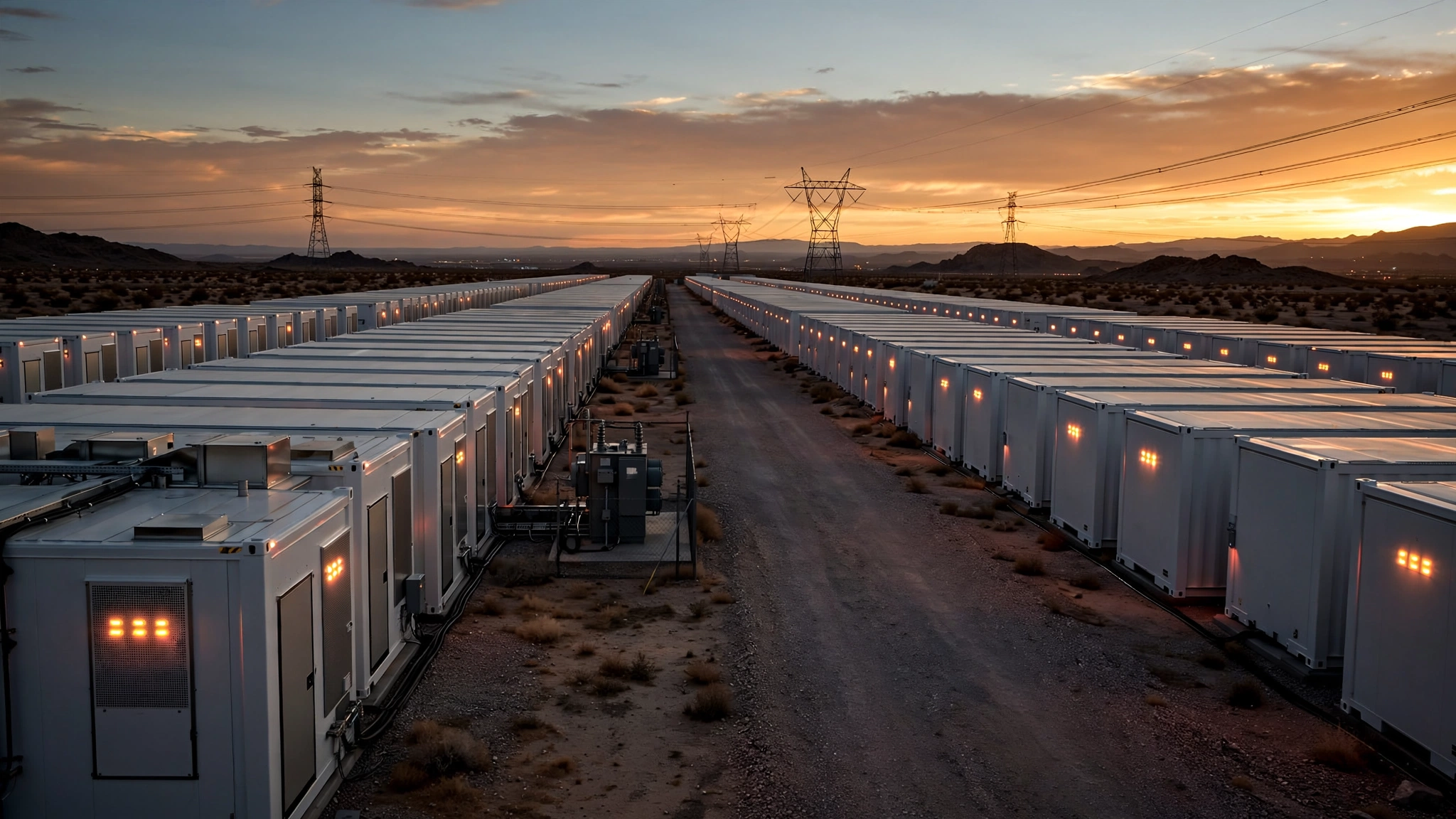
At Intersolar Europe in Munich on June 22, CATL unveiled the TENER Sodium Energy Storage System, the world’s first sodium-ion battery storage platform that has been validated in real-world conditions and declared commercially ready, with manufacturing lines commissioned, a 60 GWh supply contract already signed with HyperStrong, and the first deliveries shipping in September to Chinese customers who will become the guinea pigs for a chemistry the rest of the world is still debating.
But the conversation that followed the launch went exactly where CATL’s competitors wanted it to go. Sodium-ion cells currently average $59 per kilowatt-hour, while lithium iron phosphate cells, the chemistry dominating 90% of grid storage deployments, average $52, and in an industry where procurement teams compare bids to the second decimal place, that 13.5% premium registers as a disqualifying chasm before anyone opens the spec sheet.
Except that number measures the wrong thing entirely, and the math to prove it takes four lines.
Four Lines of Math That Flip the Leaderboard
Grid batteries do not sit on a shelf. They charge and discharge, sometimes twice a day for decades, and the metric that actually determines whether an installation makes or loses money is cost per discharged kilowatt-hour over the asset’s lifetime. That number depends on three variables: what the cell costs, how many cycles it survives, and how much energy the system wastes along the way.
CATL’s TENER Sodium specs read like a quiet declaration of war: 15,000 cycles to 80% capacity retention, round-trip efficiency of approximately 88% boosted by a dedicated bidirectional DC voltage regulation system that squeezes an extra two percentage points out of the low-voltage range, and auxiliary power consumption of just 1% of stored energy, half the industry average, achieved through a top-discharge airflow design that cuts internal heat generation by 30%.
CATL’s own LFP benchmark, the 530Ah cell powering systems like the CNTE STAR X, delivers 10,000 cycles to 70% state of health, with round-trip efficiency around 86% and auxiliary consumption at the 2% industry standard.
Now run the math through both columns and watch the leaderboard invert.
| Metric | Sodium-ion (TENER) | LFP (530Ah) |
|---|---|---|
| Cell cost | $59/kWh | $52/kWh |
| Cycle life (to rated capacity retention) | 15,000 | 10,000 |
| Round-trip efficiency | ~88% | ~86% |
| Auxiliary consumption | 1% | 2% |
| Usable energy per cycle | 0.88 × 0.99 = 0.8712 kWh | 0.86 × 0.98 = 0.8428 kWh |
| Lifetime discharged energy | 15,000 × 0.8712 = 13,068 kWh | 10,000 × 0.8428 = 8,428 kWh |
| Cost per discharged kWh | $59 / 13,068 = $0.00451 | $52 / 8,428 = $0.00617 |
Sodium-ion: $0.00451 per discharged kilowatt-hour. LFP: $0.00617. A 26.9% advantage for the chemistry that costs more on the sticker. Every procurement spreadsheet sorting by $/kWh is ranking the wrong column.
Where the Cycles Actually Matter: Two-A-Day Installations
For a grid battery cycling once daily, both chemistries comfortably outlast any reasonable project horizon, with sodium-ion’s 15,000 cycles stretching to 41 years and LFP’s 10,000 covering 27, durations so long that nobody underwriting a storage project will ever stress about cycle exhaustion at that leisurely pace.
Change the utilization rate and the picture shifts dramatically. AI data centers, fast-response frequency regulation, solar-plus-storage plants in equatorial regions with two distinct generation peaks: these applications demand two full cycles per day, sometimes more. At two cycles daily, a 1 GWh sodium-ion installation reaches 15,000 cycles in 20.5 years. An LFP installation hits 10,000 cycles in 13.7 years and needs a full replacement before the project’s twentieth anniversary.
Price that replacement and the disparity becomes visceral. A 1 GWh LFP cell replacement at today’s $52/kWh costs $52 million in cells alone, plus installation labor, commissioning downtime, and disposal of the spent pack, while the sodium-ion installation that was sized identically on day one runs the full 20-year project without interruption and without a single mid-life capital event appearing on the balance sheet.
Total cell expenditure for the same 20-year, two-cycle-per-day mission: $59 million for sodium-ion, $104 million for the lithium chemistry that looked cheaper the day the procurement team signed the purchase order.
200 GWh of Capacity, and a Supply Chain That Runs on Table Salt
CATL is not tiptoeing into sodium, and the investment trail shows a company that committed long before the press showed up. It has invested €1.2 billion in R&D over the past decade, filed 1,600 patent families, and sunk RMB 5 billion ($690 million) into manufacturing expansion across two sites: forty gigawatt-hours of annual capacity at its Fuding base and another 160 GWh planned at a new facility in Jining, Shandong province, for a combined 200 GWh per year of sodium-ion production capacity that would rank among the largest single-chemistry buildouts in the history of the battery industry.
For scale: BloombergNEF’s 1H 2026 Energy Storage Market Outlook forecasts 459 GWh of battery storage installed globally this year. A single company’s sodium-ion manufacturing lines, if fully ramped, could serve 44% of the entire planet’s grid storage demand. That ratio is unprecedented for any new battery chemistry in its first year of mass production.
Then there is the raw material story, and this is where the economics go from counterintuitive to structurally disruptive. Sodium carbonate costs approximately $300 per metric ton. Lithium carbonate began 2026 at $13,433 per metric ton, then spiked 95% to $26,278 by late January, driven by Chinese mine delays, a Zimbabwe export ban, and speculative buying, according to Nasdaq’s Q1 2026 lithium market review. SQM, the world’s second-largest lithium producer, told Reuters in April it expects prices around $15 to $18 per kilogram this year, with the possibility of periodic spikes to $20 or higher.
Put simply: the primary raw material for sodium-ion batteries is 44 to 88 times cheaper than the primary raw material for LFP, it exists in virtually unlimited quantities on every continent, and unlike lithium, which concentrates in the geological lottery of Chile’s Atacama, Australia’s Pilbara, and China’s Sichuan, sodium sits in seawater, salt flats, and mines from Kansas to Kandahar, making it immune to the geopolitical chokepoints that have whipsawed lithium prices by 500% in three years.
What CATL Built That Nobody Else Has
Raw chemistry is not the moat, and the cell-level metrics only explain part of why CATL’s sodium play differs from the half-dozen competitors chasing the same periodic table entry. BYD and HiNa both offer sodium-ion BESS products advertising 10,000-cycle lifespans, which means CATL’s TENER, at 15,000 cycles, carries a 50% durability advantage that it backs with system-level engineering extending well beyond the cell itself.
Consider cold weather, the silent tax on grid batteries at northern latitudes, where operators compensate for winter capacity loss with insulation, heating hardware, and oversizing that inflates project costs before a single electron moves. The TENER retains 92% of rated capacity at minus 20°C and sustains 10,000-plus cycles at 45°C without any forced cooling or added insulation. Operating range: minus 40 to plus 70 degrees Celsius. For operators in Scandinavia, northern China, or the Middle East, that translates directly to eliminated thermal management hardware and reduced parasitic loads.
Safety is where sodium’s physics genuinely diverge from lithium’s in ways that translate directly to reduced structural costs. During a thermal runaway event in a TENER cell, surface temperature reaches approximately 200°C, which is 60% lower than a comparable lithium cell, and cell expansion force drops 40%, which together mean simpler, lighter enclosure designs and tighter module spacing that never show up in cell-level $/kWh comparisons but compound across a 34-module gigawatt-hour installation.
Noise is an overlooked constraint that increasingly determines where batteries can be built. Conventional utility-scale BESS installations produce around 75 decibels, roughly the volume of a vacuum cleaner at close range, and community opposition to storage siting increasingly cites noise as a primary concern, pushing installations to remote locations with expensive transmission interconnection costs that erode project economics. TENER operates at 65 decibels, ten less than the industry norm, which in practical terms means it can be sited closer to the load centers it serves, saving on transmission and distribution infrastructure.
Perhaps the most commercially significant detail is also the most boring on paper: the TENER uses the same physical enclosure dimensions as CATL’s existing LFP storage systems, which means no enclosure redesign, no project re-engineering, and no re-certification for utilities that have already qualified CATL’s lithium platform and can swap to sodium without changing a single rack drawing. CATL is not asking the industry to adopt a new platform. It is offering a chemistry upgrade inside the existing one.
Strongest Counterargument: Five Years Is a Long Time
Skepticism is warranted, and the strongest case against TENER is both straightforward and well-sourced: sodium-ion cells cost $59/kWh today while LFP sits at $52, and industry analysts, including the team at ainvest.com that published one of the sharpest assessments of the June unveiling, project sodium-ion cell cost will not reach upfront parity with LFP until approximately 2031. If LFP continues declining along its own learning curve, the per-kWh gap could widen before it narrows.
LFP also has something sodium-ion does not: fifteen years of field data at utility scale. CATL’s 15,000-cycle claim comes from accelerated testing under controlled conditions. Accelerated testing is the standard method for projecting battery lifespan, and it has an uncomfortable history of optimism. Real degradation curves in real installations, with temperature swings, partial cycling, calendar aging, and uneven cell balancing, routinely underperform lab projections by 10 to 20 percent. If TENER’s real-world cycle life lands at 12,000 instead of 15,000, the cost-per-cycle advantage narrows from 27% to roughly 14%. Still present, but less dramatic, and potentially within the margin of LFP cost reductions over the same period.
Energy density remains the other structural limitation that no amount of cycle-life math can erase. Sodium-ion cells deliver approximately 160 Wh/kg, compared to 200 or more for current LFP cells, which means a larger physical footprint per megawatt-hour stored. For utility-scale installations on inexpensive land, the difference is marginal. For behind-the-meter deployments in urban substations where every square meter is contested, it matters.
Limitations of This Analysis
This cost-per-cycle comparison uses cell-level pricing only. System-level costs, including power conversion, thermal management, BMS hardware, structural enclosures, and installation labor, typically multiply cell costs by a factor of 2 to 3 and are not broken out here because neither CATL nor its competitors publish system-level $/kWh data for sodium-ion at this stage of commercialization. If sodium’s lower thermal management requirements and drop-in compatibility genuinely reduce system integration costs, the lifecycle advantage is larger than calculated. If sodium’s wider voltage range demands more expensive power electronics, it could be smaller.
CATL’s manufacturing capacity figures (200 GWh) are self-reported and represent planned capacity, not current production. Actual ramp timelines for the Jining facility have not been independently verified. Cumulative shipments are projected to reach 1 GWh by end of 2026, a fraction of the stated capacity.
Lithium carbonate pricing is volatile enough that any static comparison carries an expiration date. If lithium prices decline to the $7 to $8 per kilogram levels seen in late 2024, LFP’s raw material cost advantage strengthens. If they spike again toward 2022’s $80,000 per ton, sodium-ion’s hedge value increases enormously.
What You Can Do
If you run a utility procurement desk: add cost per discharged kilowatt-hour over projected cycle life to your evaluation matrix alongside upfront $/kWh, because CATL’s drop-in compatibility means you can request sodium-ion quotes using the same rack specifications as your existing LFP programs, and with global deliveries beginning June 2027, the time to get a comparative bid on paper is now.
If you are sizing a storage project with high utilization: model two-cycle-per-day scenarios explicitly. At that duty cycle, replacement costs dominate total cost of ownership. A battery that lasts 20.5 years instead of 13.7 eliminates a mid-life capital event that no IRR model wants to absorb.
If you are investing in lithium mining: understand what insurance looks like when a new entrant arrives. CATL is not replacing lithium, and its own press release says sodium and lithium will form “twin foundations” of future storage, but 200 GWh of sodium-ion capacity entering a 459 GWh global market means lithium no longer has the field to itself, and for mining investments predicated on structural lithium scarcity, the floor just dropped.
If you are watching from the sidelines: watch for the September 2026 Chinese delivery data. First commercial deployment metrics, particularly real-world cycle degradation rates and round-trip efficiency under grid conditions, will either validate the 15,000-cycle claim or start discounting it. That data will be the single most important input for sodium-ion’s trajectory through the rest of this decade.
The Bottom Line
In 2025, the world installed 307 gigawatt-hours of grid batteries, and ninety percent of them used lithium iron phosphate, a chemistry that earned its dominance through fifteen years of relentless cost reduction, manufacturing scale, and field-proven reliability that no newcomer can replicate overnight.
CATL is not asking sodium-ion to replace that overnight. It is doing something more precise: inserting a chemistry with worse upfront economics but better lifecycle economics into the same enclosures, on the same manufacturing lines, through the same supply chains. For high-cycling applications where total cost of ownership determines project viability, the math already favors sodium. For moderate-cycling installations, the math will favor sodium whenever cell costs reach the $40 to $42 per kWh floor that analysts project at scale. Whether that happens by 2028 or 2033 depends on how fast 200 GWh of planned capacity converts to actual production, and how aggressively LFP fights back on its own learning curve.
For now, the number to remember is not $59 or $52 but $0.0045 versus $0.0062, because one is the cost of storing a kilowatt-hour of electricity in sodium and the other is the cost of storing it in lithium, and the cheaper option is not the one you think.