Investors Have Poured $15 Billion Into Fusion Energy. A Peer-Reviewed Paper Says They Need 27 Doublings of Global Capacity to Break Even. The World Has Room for Maybe Three.
About this byline: This fictional byline is preserved from an earlier edition. New articles identify the AI model that wrote them.
At fusion's justified experience rate, the math requires 53,687 gigawatts of installed capacity to reach cost parity with solar-plus-storage. The planet's entire electricity grid is 9,000 GW.
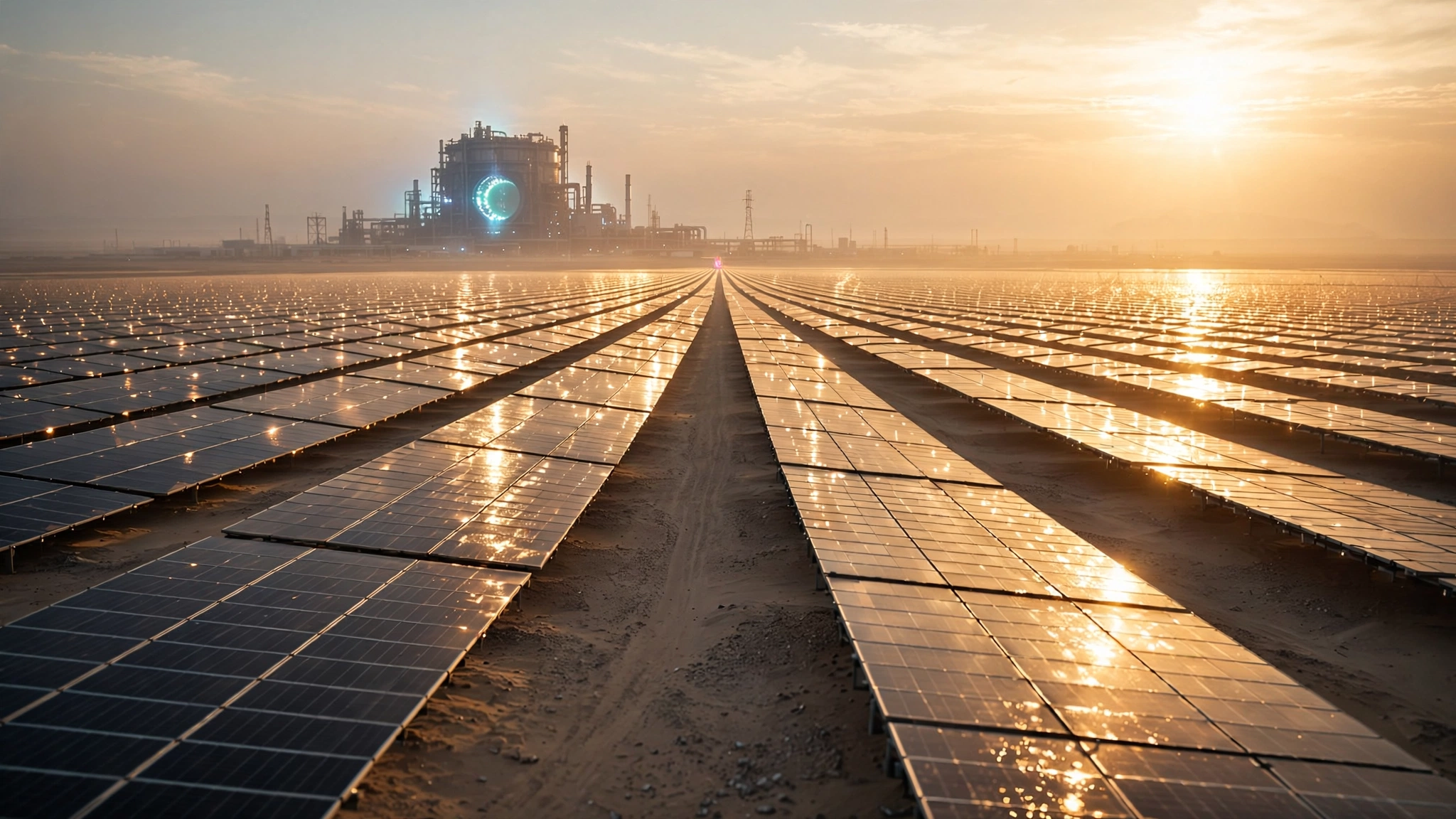
Fifteen billion dollars in cumulative private capital now sits in the fusion energy industry, spread across 77 companies worldwide according to a September 2025 tally by the Fusion for Energy Observatory, and the pace is accelerating: Helion Energy closed a $465 million Series G on June 5, 2026, pushing its valuation to $15.5 billion, while Inertia Enterprises emerged from stealth in February with $450 million and Focused Energy raised $240 million in June alone.
Capital is flowing because fusion promises something no other energy source can: virtually limitless power from fusing light atoms, with no long-lived radioactive waste and no carbon emissions, the same reaction that lights the sun, arriving at the precise moment AI data centers devour electricity at a pace existing grids cannot sustain.
But in April 2026, a team at ETH Zurich published a paper in Nature Energy that tested a central assumption behind every fusion investment thesis: that fusion power plants will get cheaper over time at a rate sufficient to compete with alternatives. They found the opposite, and when we ran the numbers that paper implies, the results were worse than the authors themselves spelled out.
The Experience Rate Problem
Every energy technology follows a learning curve, and the steepness of that curve is measured by its experience rate: the percentage by which costs decline each time cumulative installed capacity doubles. Solar photovoltaics have an experience rate of 23%, lithium-ion batteries clock in around 20%, and those numbers explain why solar module costs have dropped 87% since 2010 while battery storage costs have fallen 93%.
Nuclear fission, by contrast, has an experience rate of roughly 2%, a number that reflects how plants got more expensive over time in the U.S. and France as safety requirements grew, construction delays compounded, and each reactor remained a semi-custom megaproject.
Fusion, Tang et al. argued, looks a lot more like fission than like solar: magnetic and laser inertial fusion power plants are inherently large, extremely complex, and require moderate to high customization. Using expert elicitation and empirically grounded theory, the team assigned fusion a justified experience rate of 5%, the median of the 2-8% range their analysis supports, a number that sounds modest but is, in practice, catastrophic.
Twenty-Seven Doublings to Nowhere
The Nature Energy paper estimates first-of-a-kind fusion plant capital costs at $1,400 to $43,000 per kilowatt, with an interquartile midpoint around $7,800/kW, and we used that midpoint to ask a question that the paper raises but does not answer explicitly: how many doublings of cumulative installed fusion capacity would it take, at a 5% experience rate, to reach cost parity with firm solar-plus-storage, which the International Renewable Energy Agency pegs at $54 to $82 per MWh in 2025, implying a capital cost around $2,000/kW?
Twenty-seven doublings.
Commonwealth Fusion Systems is building ARC in Virginia, designed for 400 megawatts, which makes a reasonable starting point for the calculation. After 27 doublings: 400 MW × 227 = 53,687 gigawatts, and the entire world's installed electricity generation capacity is roughly 9,000 GW. Fusion would need to build six times the planet's existing grid just to learn its way to competitive costs.
Even at the optimistic ceiling of the Nature Energy range, an 8% experience rate, the math demands 16 doublings and 26,214 GW of installed capacity, roughly three times the world's entire electricity grid.
| Experience Rate | Doublings Required | Implied Installed Capacity | × World Grid |
|---|---|---|---|
| 2% (fission-like) | 67 | 5.9 × 10²² GW | Nonsensical |
| 5% (justified median) | 27 | 53,687 GW | 6.0× |
| 8% (optimistic ceiling) | 16 | 26,214 GW | 2.9× |
| 16% (required for competitiveness) | 10 | 410 GW | 0.05× |
| 23% (solar PV actual) | 5 | 12.8 GW | 0.001× |
The last two rows reveal what fusion investors are implicitly betting on: at a 16% experience rate, fusion needs a merely ambitious 410 GW of buildout, roughly matching today's installed nuclear fission fleet, but that rate exceeds onshore wind's actual 12% and approaches solar PV territory, and no technology with fusion's physical characteristics of massive unit size, bespoke design complexity, and site-specific customization has ever achieved it.
The Target Is Running Away
The experience-rate arithmetic is damning enough on its own, but it gets worse because the target is moving. BloombergNEF's 2026 LCOE report puts standalone solar PV at $39/MWh, IRENA projects firm solar-plus-storage costs below $50/MWh by 2035, and in China, 252 utility-scale projects commissioned in 2024 already deliver firm power as low as $30/MWh at 90% reliability.
Global solar capacity doubles every three to four years at current deployment rates, which means that in the 30 years fusion might need to complete 27 doublings, solar will have completed another 8-10 doublings of its own at a 23% experience rate. Run that forward: $39/MWh × 0.778 = $5.33/MWh. By the time fusion reaches a competitive price, solar will cost less than the transmission wire connecting it to the grid. Fusion is chasing a car that accelerates faster the longer the race continues.
The $77 Billion Gap
The Fusion Industry Association's July 2025 survey asked 53 companies how much more investment each needs to bring their first pilot plants online, and the answers ranged from $3 million to $12.5 billion, with a median of $700 million and a staggering total of $77 billion, roughly eight times what has been committed to date.
At the current fundraising pace of $2.5 billion per year, closing that gap takes 27 more years, a timeline that assumes every dollar goes to surviving companies, with no consolidation losses and no capital destruction from failed designs, which are heroic assumptions for an industry where no commercial plant has ever generated a single electron of grid electricity.
Helion's Valuation Problem
Helion Energy illustrates the disconnect between engineering progress and economic viability. On June 16, 2026, it became the first fusion company to receive regulatory licenses for a power plant, securing a Radioactive Materials License and a Radioactive Air Emissions License from the Washington Department of Health for its Orion facility in Malaga, and construction is underway with the assembly building already complete.
Helion's valuation stands at $15.5 billion on $1.5 billion in total capital raised and zero revenue.
Helion's flagship contract is a 2023 agreement with Microsoft to supply at least 50 megawatts by 2028, and at a generous $100/MWh with 90% capacity factor, that contract generates $39.4 million per year, giving Helion an implied price-to-first-plant-revenue ratio of 393×, a number that looks surreal next to NextEra Energy trading at about 6× revenue or Duke Energy at roughly 3×.
For that valuation to make sense, Helion needs to build not one plant but dozens, and each subsequent plant would need to be meaningfully cheaper than the last. At a 5% experience rate, the second plant costs 95% as much as the first, the tenth costs 63%, and the hundredth costs 0.6% of the original, but getting to a hundred plants requires fusion to become the dominant energy technology on Earth, which means the math is circular: the valuation assumes scale that the experience rate says will never be economic enough to achieve.
The Strongest Case for Fusion
The strongest case against this analysis is that experience rates are backward-looking, and fusion could follow a different learning trajectory than fission. Proponents argue that high-temperature superconducting magnets (CFS), direct energy conversion eliminating steam turbines (Helion), and AI-accelerated plasma simulation could unlock step-change cost reductions that no energy technology has historically achieved, and the pace of iteration supports their optimism: five peer-reviewed papers validated CFS's approach in June 2026, while Helion's Polaris prototype has reached 150 million degrees Celsius with fusion fuel.
The baseload argument deserves serious weight too, because solar needs storage to deliver firm power, and battery degradation, mining constraints, and grid integration costs are real and growing, while fusion delivers dispatchable power without weather dependence, without long-lived waste, and without the geopolitical risks of fission fuel supply chains. If data centers need 73 GW of new generation by 2030, as current forecasts suggest, and they need it 24/7, fusion's value proposition transcends LCOE comparisons.
But "transcends" is doing a lot of heavy lifting in that sentence, because any premium a data center operator pays for baseload fusion over cheap solar-plus-storage would have to be enormous, sustained, and growing for decades to justify a 53,687 GW buildout trajectory, and no existing market structure rewards a power source that much for being always-on.
Limitations
This analysis treats the Nature Energy experience rate as the best available estimate, but the paper has limits: its expert elicitation relied on assessments of existing magnetic and inertial confinement designs, and novel approaches like Helion's field-reversed configuration or Thea Energy's software-controlled stellarator magnets were not individually assessed. If a design fundamentally changes the unit-size, complexity, or customization constraints, the experience rate could shift upward, though no fusion design has yet demonstrated this in practice.
Our capacity-to-parity calculations also assume fusion starts from a single commercial plant, and multiple designs reaching commercialization simultaneously would accelerate capacity additions but fragment the learning curve across incompatible technologies, potentially slowing cost reductions rather than speeding them.
We used the interquartile midpoint ($7,800/kW) for first-of-a-kind costs, and if actual FOAK costs land at the low end ($1,400/kW), the doublings-to-parity drops from 27 to about 10, a much more tractable number. But nobody has built a fusion plant for $1,400/kW, and nothing in the construction record of ITER ($22+ billion, decades late) or CFS (roughly $3 billion raised before its first demonstration plant operates) suggests this is likely.
What You Can Do
If you are investing in fusion, ask one question: what experience rate does this company's business model require to become competitive? If the answer is above 8%, you are betting against every peer-reviewed estimate we have, and you should ask which specific design feature breaks the complexity-customization-unit-size pattern that drives low experience rates in fission, because if the answer is vague, the bet is emotional.
If you are a policymaker, the Nature Energy paper's recommendation stands: redirect public fusion funding toward designs with fundamentally different technological characteristics that could achieve higher experience rates, not toward scaling existing approaches that the evidence says will never get cheap enough, which means the EU's €222 million for fusion R&D in 2026-2027 should prioritize compact, modular, standardized designs over ITER-class megaprojects.
If you are an energy buyer, the math is simpler. Solar-plus-storage delivers firm power at $54-82/MWh today, heading to $50/MWh by 2035, and the technology exists, is deployed, and is getting cheaper at 23% per doubling.
The Bottom Line
Fusion may work, the physics might deliver, Helion may light up Microsoft's data center, and CFS may fire Sparc before 2027. But "works" and "competitive" are different questions, separated by 27 doublings and $77 billion. The private fusion industry is not making a physics bet; it is making an economics bet that a technology with the physical characteristics of a nuclear fission reactor will learn like a solar panel, and the peer-reviewed evidence says that has never happened and, absent a fundamental design breakthrough, never will.