16 Crashes in 4 Months, 1 Safety Monitor Intervention. Uber’s Robotaxi Partner Has a 93.75% Failure-to-Act Rate.
NHTSA opened an investigation into Avride on May 8 after identifying 16 crashes in Dallas between December 2025 and March 2026. Every vehicle had a safety monitor in the driver’s seat. In 15 of 16 crashes, that monitor did not attempt to intervene. Our crash-rate estimate: 7–12x worse than human drivers, 5–11x worse than Waymo. The passengers booked through Uber.
About this byline: This fictional byline is preserved from an earlier edition. New articles identify the AI model that wrote them.
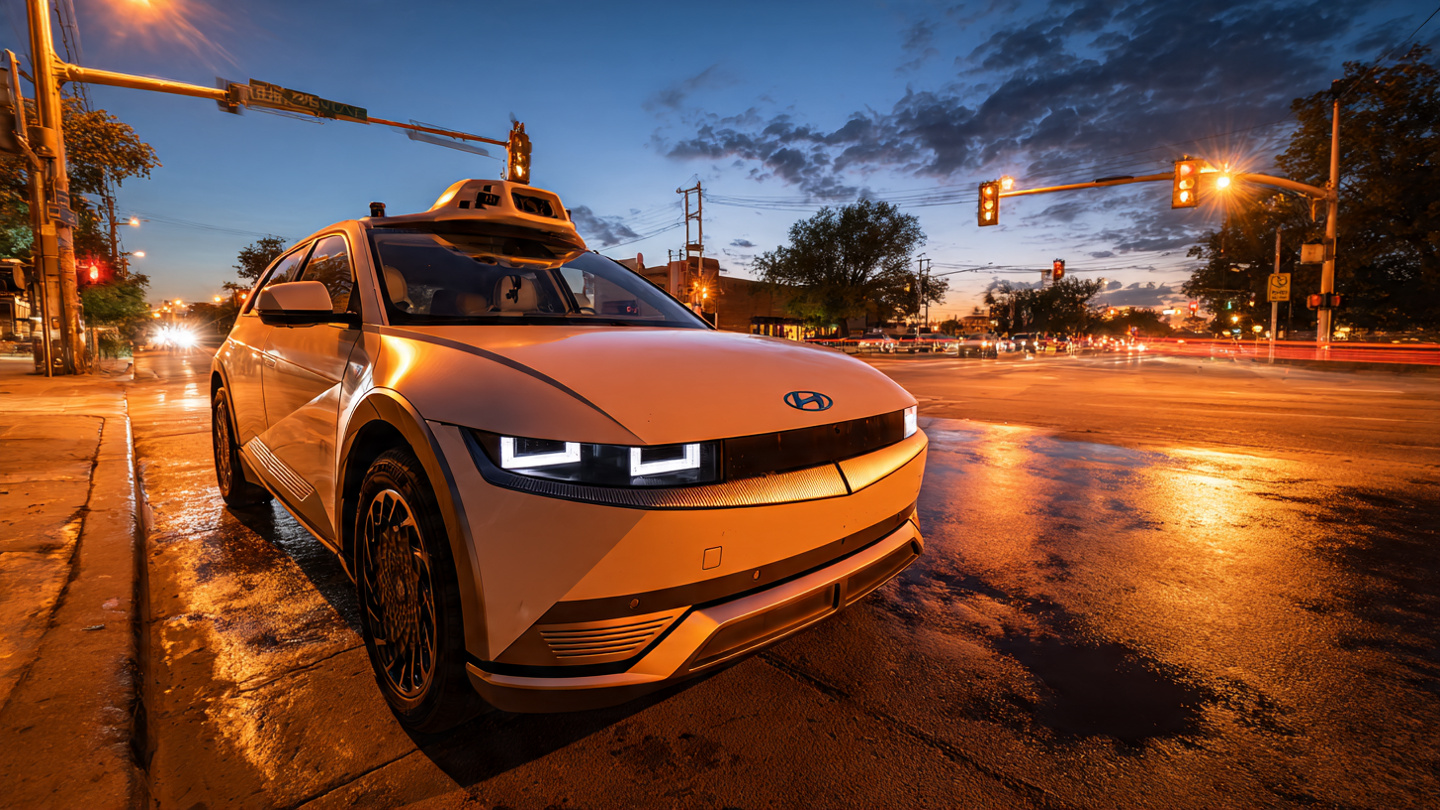
One out of sixteen. That is how many times a human safety monitor in an Avride autonomous vehicle attempted to intervene before a crash, according to the National Highway Traffic Safety Administration’s investigation opened May 8, 2026. The other fifteen times, the monitor sat in the driver’s seat while the car changed lanes into oncoming traffic, failed to brake for stopped vehicles, and drove into stationary objects. All sixteen crashes occurred in Dallas between December 2025 and March 2026. Every one carried paying passengers who booked their rides through the Uber app.
NHTSA did not mince words: the vehicles displayed “excessive assertiveness and insufficient capability,” behavior the agency said “may also constitute traffic safety violations.”
Who Is Avride?
Avride is a subsidiary of Nebius, the Amsterdam-based company formerly known as Yandex NV, and it inherited Yandex’s self-driving technology stack, which has been in active development since 2017. In October 2024, Uber announced a partnership to deploy Avride vehicles on its platform, with a combined investment commitment of up to $375 million from Uber and Nebius. Commercial passenger service launched in Dallas on December 3, 2025, covering a 9-square-mile zone.
The fleet consists of approximately 200 Hyundai Ioniq 5 vehicles equipped with 13 cameras, lidar, radar, and additional sensor arrays. Dozens more are added monthly, but here is the arrangement that matters: passengers open the Uber app, request a ride, and get matched to an Avride vehicle. Uber collects the fare while Avride provides the technology, and when the car hits a dumpster, the passenger’s last interaction was with Uber.
The Crash Rate Math Nobody Ran
NHTSA’s filing identifies 16 crashes over roughly 120 days. Avride has not disclosed total miles driven, so we estimated.
| Parameter | Estimate | Source / Basis |
|---|---|---|
| Fleet size (period average) | ~125 vehicles | Ramped from ~50 to 200; Reuters, SelfDriveNews |
| Daily miles per vehicle | 50–100 (midpoint: 75) | Conservative for urban robotaxi ops |
| Operating days | ~120 (Dec 3 – end Mar) | Launch date to crash period end |
| Estimated total miles | ~1.125 million | 125 × 75 × 120 |
| Conservative range | 750K – 1.5M miles | Low/high fleet × daily miles |
Sixteen crashes in approximately 1.125 million miles yields a crash rate of roughly 14.2 per million miles. The range, depending on assumptions: 10.7 to 21.3.
Now compare that to the available baselines.
| Operator | Crashes per Million Miles | Data Source |
|---|---|---|
| Avride (estimated) | 10.7 – 21.3 | NHTSA crash count / estimated mileage |
| Waymo | ~2.0 | 170.7M rider-only miles; ARK Invest Q4 2025 |
| Human drivers (all severity) | ~1.82 | NHTSA 2024: ~6M crashes / 3.3T VMT |
| Tesla Cybercab (Austin) | ~7.3* | Electrek: 14 crashes in ~1.9M est. miles |
*Tesla estimate is rough and uses similar fleet-size methodology. All comparisons carry the methodological caveats discussed below.
Avride is crashing at 7 to 12 times the rate of human drivers. It is 5 to 11 times worse than Waymo, which has logged 170.7 million rider-only miles and published peer-reviewed safety data covering 56.7 million of those miles. Waymo reports 92% fewer serious-injury crashes and 83% fewer airbag deployments than human baselines. Not comparable.
The gap between Avride and its competitors is not close.
The Safety Monitor Problem
Every Avride vehicle carries a trained safety monitor in the driver’s seat. One job. That person exists for exactly one reason: to intervene when the autonomous system fails. In 16 crashes over four months, the monitor attempted to intervene exactly once. That is a 6.25% intervention rate, or alternatively, a 93.75% failure-to-act rate.
NHTSA’s preliminary review of crash videos showed vehicles changing lanes into the path of other vehicles, failing to slow or stop for traffic ahead, and striking stationary objects partially blocking lanes. These are not edge cases. They are not even hard cases. A car that does not brake for a stopped vehicle ahead of it has failed at a task humans accomplish unconsciously ten thousand times a year.
The single injury occurred in December 2025 in Dallas, when an Avride vehicle clipped the open door of a parked pickup truck, a minor injury this time but a collision pattern that foreshadows worse outcomes at higher speeds.
Avride’s response, delivered through a statement and not a press conference, was that it welcomes “the opportunity to provide the agency with a deeper understanding of our safety protocols and technology.” The company added that in all cases “the vehicle was under the supervision of a trained safety operator on board,” that “in most cases, the vehicle was traveling at low speeds,” and that “many of the events were precipitated by the actions of other road users.” Uber did not comment. Silence noted.
Read that again: supervised by a safety operator, in fifteen of sixteen crashes, without intervention.
Uber’s Platform Model: Outsource the Risk, Keep the Brand
This is the second time Uber has faced a fatal reckoning with autonomous vehicle safety, and the structural parallel is unsettling. In March 2018, an Uber ATG test vehicle killed Elaine Herzberg in Tempe, Arizona, and that was Uber’s in-house AV program, which the company subsequently shut down and sold to Aurora Innovation at a loss. Uber learned the lesson that building AV technology in-house creates existential liability when the technology fails catastrophically.
The current model is the answer to that lesson: do not build the technology, but instead partner with companies that do. Liability shifts. When Avride’s car changes lanes into oncoming traffic, the crash belongs to Avride. Uber provided the passenger, collected the fare, and bears no development liability for the software that failed to brake.
Uber’s AV strategy now spans at least five partners: Avride, Waymo, Nuro, MOIA/VW, and Wayve/Nissan, and the company reported that autonomous vehicle trips on its platform grew 10x year-over-year in Q1 2026 earnings while targeting 15 cities by year-end. Scale is the priority. The platform model that made Uber a $200 billion company by not owning cars now extends to not owning the AI that drives them. Passengers interact with Uber’s brand, Uber’s app, Uber’s payment system. They have no reason to know or care which partner built the self-driving stack. Not until something goes wrong.
The Strongest Case for Avride
Avride’s implicit defense deserves its full weight: “frequency of incidents relative to our mileage has steadily declined.” True enough. Every autonomous vehicle company’s first miles are its worst. Waymo’s 2017-era technology was dramatically worse than its 2026 performance across every safety metric, and learning curves in autonomous driving are steep, so sixteen crashes in a company’s first four months of commercial operation may genuinely represent the steepest part of that curve.
There is a separate argument that NHTSA’s crash count may include incidents that would not all qualify as “police-reported” crashes under standard classification, which is the basis for the human-driver baseline of 1.82 per million VMT. If the threshold for reporting under NHTSA’s Standing General Order for AV companies is lower than the threshold that generates a police report for human drivers, the comparison overstates Avride’s relative danger. The 7–12x multiplier might shrink to 3–5x under an apples-to-apples classification. Still worse than human, but not catastrophically so.
And some crashes involved other vehicles turning into Avride cars. Fault allocation in those incidents is genuinely unclear. Fair enough.
What This Analysis Cannot Prove
Avride has not disclosed total mileage. Our crash rate estimate of 14.2 per million miles depends on fleet size, daily utilization, and operating period assumptions that could be wrong by a factor of two in either direction. At the low end of estimated mileage (750,000 miles), the rate rises to 21.3 per million. At the high end (1.5 million), it drops to 10.7, and neither scenario makes the picture good.
We cannot determine why safety monitors failed to intervene in 15 of 16 crashes. Possible explanations range from insufficient training to distraction to system failures happening too quickly for human reaction, and NHTSA’s investigation may clarify this. Or maybe not. The single intervention may have been the one crash slow enough for a human to process and act.
Waymo’s 170.7 million rider-only miles span multiple cities over multiple years. Avride’s 1.125 million estimated miles cover one city over four months. The comparison is directionally useful but not statistically rigorous at Avride’s sample size.
Finally, NHTSA’s crash definition under its Standing General Order for AV manufacturers may capture incidents that would not generate a police report for human-driven vehicles, which would inflate the per-million-mile rate relative to the human baseline. The magnitude of this reporting-threshold effect is unknown.
The Broader Pattern
Avride is not alone in struggling. The WSJ reported on May 30 that robotaxi backlash is spreading nationwide: Waymo vehicles getting stuck in floods in San Antonio and Atlanta, Tesla’s CEO admitting robotaxis get confused by construction and drive in “literal infinite loops,” and the NTSB investigating Waymo after a vehicle struck a child near a Santa Monica elementary school. In China, Baidu’s Apollo Go fleet abruptly stopped on Wuhan streets in March, prompting a national safety review and a pause on new AV licenses. The pattern is global.
Senator Edward Markey released a report in May taking AV companies to task for “faking their true autonomy” through heavy reliance on remote human teleoperators, a critique that applies directly to Avride’s model of placing a human monitor in the seat and then apparently training that human to be passive. Former Tesla AI trainers told Reuters they would not ride in a Tesla robotaxi “if you f***ing paid me.”
What distinguishes Avride is not the crashes but the monitor failure rate. A 93.75% failure to intervene suggests the safety monitor system is not a safety system at all but rather a compliance checkbox.
What You Can Do
If you are a passenger: Uber does not prominently disclose which AV partner is operating your vehicle until after matching. Before accepting a ride flagged as autonomous, check the vehicle details screen. You have the right to cancel. If your city’s regulatory framework provides a complaint mechanism for autonomous vehicle incidents, use it. NHTSA accepts consumer complaints at nhtsa.gov/report-a-problem.
If you are a city official or regulator: Dallas permitted Avride to operate in a 9-square-mile commercial zone. Sixteen crashes in four months in that zone is a signal. Demand mileage disclosure as a condition of operating permits, because without denominators, crash counts are entirely uninterpretable. Require per-million-mile reporting, the same standard Waymo voluntarily publishes, and the same metric that would have made these 16 crashes immediately legible as a 7–12x safety deficit.
If you work in the AV industry: The safety monitor failure rate is a problem that transcends Avride. Human monitors are bad at monitoring autonomous systems because humans are bad at sustained vigilance of automated processes. This is one of the most replicated findings in human factors research, dating to Bainbridge’s “Ironies of Automation” (1983). The solution is not better training but a system architecture that does not depend on a human doing the one thing humans are worst at: paying attention to a machine that almost always works correctly.
The Bottom Line
Uber solved its AV liability problem by outsourcing it. Avride’s 16 crashes in 120 days, with a safety monitor present and inactive in nearly every one, reveal a specific and dangerous failure mode of the platform model: the company that controls the passenger relationship bears no responsibility for the technology that failed. The passengers booked through Uber, but the crashes belonged to Avride. The safety monitor, the last human in the loop, was present and did nothing 93.75% of the time.
NHTSA’s investigation will determine whether these crashes represent a learning curve or a design flaw. But the question regulators should be asking is not whether Avride’s software will improve, because it almost certainly will. The question is who bears the risk while it learns, and whether the answer should be paying passengers who opened the Uber app expecting a normal ride.